
Latest Trends in Manual Torque Wrench Design for Industry 4.0 Applications
Posted: October 3, 2025 Filed under: Uncategorized Leave a comment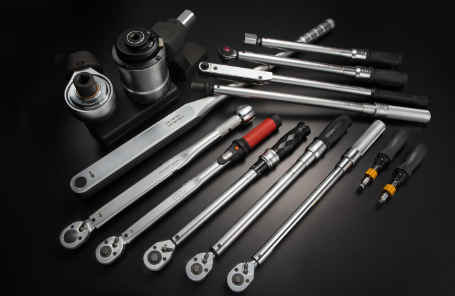
Executive Summary and Pre-introduction
The modern manufacturing landscape, defined by Industry 4.0, demands unprecedented levels of precision, traceability, and connectivity. While electric and digital wrenches often dominate discussions of smart factories, the manual torque wrench remains critical across industrial sectors due to its reliability, durability, and cost-effectiveness. This article explores how traditional manual torque wrench design is evolving—shifting toward mechatronic and electronic hybrids—to meet the strict quality management system (QMS) requirements and data-driven demands of Industry 4.0. For B2B procurement professionals, understanding these trends and the strategic use of OEM/ODM partnerships is key to ensuring product quality, safety, and compliance in high-stakes applications.
The Enduring Role of Manual Torque Wrenches in Precision Assembly
Manual torque wrenches are essential tools used to apply a specific torque to fasteners (such as nuts, bolts, or lag screws) to achieve proper tension and loading. For decades, these tools have served as the industry standard, valued primarily for their mechanical reliability and simplicity.
Core Features and Reliability
Manual wrenches operate using established mechanical principles, often employing a clicker or spring mechanism to provide tactile and audible feedback when the desired torque is reached. Their advantages include durability, the ability to operate without power sources (making them reliable in challenging or remote environments), and a lower initial cost compared to digital alternatives.
Common types of manual torque wrenches available include:
- Click Torque Wrench: Uses a calibrated clutch mechanism (ball detent and spring) to provide tactile and audible feedback when the set torque is met.
- Beam Type/Deflecting Beam Wrench: Uses the deflection of a beam proportional to the applied force to indicate torque magnitude.
- Split-Beam and Classic Torque Wrench: Traditional designs known for ruggedness.
- Slipper Torque Wrench (Limiting Type): This mechanism slips once the predetermined torque limit is reached, preventing overtightening.
The Critical Need for Torque Control
In any manufacturing environment relying on threaded fasteners, implementing strict torque control protocols is necessary to substantially improve the QMS. Fastener failure—whether due to under-tightening (which causes the fastener to work free) or over-tightening (which causes deformation or warp)—can lead to increased failure rates, poor customer satisfaction, and, in critical sectors, catastrophic safety problems. Therefore, the ability to apply a specified, discrete amount of torque accurately is non-negotiable.
Industry 4.0: Transforming Manual Tool Design (Key Trends)
Industry 4.0 is driving the convergence of physical tools and digital technologies, marked by trends such as the integration of the Internet of Things (IoT), Big Data analytics, and Artificial Intelligence (AI). While traditional manual wrenches offer simplicity, they inherently suffer from a lack of data logging capabilities, which hinders modern quality assurance and compliance standards. This gap has spurred the evolution of the manual wrench into smarter, connected alternatives.
The Shift to Mechatronic and Electronic Solutions
To bridge the gap between manual reliability and digital demand, manufacturers are developing advanced tools that function as a first step towards smart manufacturing integration.
- Mechatronic Torque Wrenches (The Smart Manual Tool): These hybrid tools are designed for the Smart Factory era, combining mechanical robustness with integrated smart technology. Mechatronic wrenches (like the Atlas Copco MTRwrench) can keep a log of all tightening data, offer robust design for demanding conditions, and feature connectivity for integration into the larger manufacturing ecosystem.
- Electronic Torque Wrenches: Engineered for the toughest production demands, electronic wrenches (like the Atlas Copco STRwrench Compact) offer superior precision (repeatability of ±0.5%), visual feedback via displays, digital data storage, and wireless connectivity. Their capacity for data logging and traceability is crucial for quality assurance and adherence to precise requirements.
Trend Focus: Traceability and Quality Management
One of the most significant impacts of Industry 4.0 on tool design is the mandate for comprehensive traceability. The ability to capture torque values, time stamps, and relevant data provides accurate documentation and analysis of tightening processes. This capability facilitates compliance with stringent international standards.
| Torque Wrench Type | Key Features for Industry 4.0 | Repeatability (Example Range) | Data Traceability | Integration Capabilities |
|---|---|---|---|---|
| Manual (Mechanical) | Simple, durable, tactile feedback, cost-effective | $\pm 4%$ | No Data Logging | None (Stand-alone tool) |
| Mechatronic | Robust design, audible/tactile/visual feedback, reduced operator fatigue | $\pm 3%$ | Traceable log of all tightening data | Integrated with ecosystem (e.g., Atlas Copco Ecosystem) |
| Electronic/Digital | High precision, programmable settings, improved operator comfort | $\pm 0.5%$ | Digital data storage, Torque/Angle Traceability | Seamless system integration via connectivity |
Industry Trend Reference:
- Digital Transformation and Industry 4.0: [https://www.artzfolio.com/blog/oem-odm-emerging-trends-technologies/](The Future of OEM/ODM: Emerging Trends and Technologies)
Critical Applications Driving Innovation
Precision manual, mechatronic, and electronic torque wrenches are indispensable across various high-value, safety-critical sectors. The tools must ensure accurate fastening to maintain product integrity and safety.
Key application sectors include:
- Automotive Manufacturing & Maintenance: Essential for engine assembly, chassis components, and general maintenance. The need for high precision and compliance has driven the adoption of advanced electronic tools in this sector.
- Aerospace & Marine Industry: Requires stringent quality control due to extreme operating conditions and safety demands. Precision and traceability (data logging) are paramount.
- Wind Energy & Renewable Power: Used for large-scale, heavy-duty fastening in turbines and power generation equipment.
- Heavy-Duty Vehicle & Agricultural Machinery: Requires durable tools capable of handling high torque loads and rugged environments.
- Oil & Gas Industry: Critical for precise tightening of fasteners on pipelines, structures, and equipment to ensure integrity and safety.
Industry Application Reference:
- Aerospace, Manufacturing, Transportation, Wind Power, Energy Generation: [https://www.tw-torquetech.com/](Torque-Tech Application).
Ensuring Quality Management and Compliance
The selection and use of manual torque wrenches are standardized globally. The International Organization for Standardization (ISO) maintains ISO 6789, which covers construction, tolerance, and recalibration procedures for hand-operated torque tools. Similarly, the American Society of Mechanical Engineers (ASME) maintains ASME B107.300.
For Type 2 (Setting) torque wrenches, the ISO standard specifies an allowable deviation of $\pm 4%$ for tools above 10 Nm. Furthermore, calibration must occur after 5,000 torquing cycles or 12 months, whichever is sooner, to ensure the tool remains reliably usable. Modern digital tools further enhance QMS by providing detailed assembly records and traceability, which aids in meeting standards like ISO 9001.
Strategic Outsourcing: OEM vs. ODM in Torque Wrench Production
For buyers and brand owners, choosing the right manufacturing partnership is a strategic decision that affects design control, cost, and time-to-market. Torque wrench suppliers frequently offer both OEM and ODM services to meet diverse market demands.
Understanding OEM for Custom Requirements
Original Equipment Manufacturing (OEM) is the ideal model when a company needs a fully customized manual torque wrench with proprietary features.
- Design Control: The buyer retains full control over the product idea, design capabilities, and intellectual property (IP).
- Investment: Requires high initial investment in R&D, molds, and tooling.
- Outcome: Ensures a unique, highly tailored product that aligns precisely with brand identity and specific technical specifications.
Utilizing ODM for Speed and Cost Efficiency
Original Design Manufacturing (ODM) is preferred when speed and cost savings are prioritized.
- Design Control: The manufacturer owns the IP and provides pre-designed products from their portfolio.
- Customization: Limited to minor changes such as color adjustments, packaging, or logo addition.
- Outcome: Allows brands to quickly bring products to market by avoiding lengthy R&D phases.
| Feature | OEM (Original Equipment Manufacturer) | ODM (Original Design Manufacturer) |
|---|---|---|
| IP Ownership | Buyer (Client) | Manufacturer (Holds IP Rights) |
| Customization | Complete control over features, materials, and design | Limited to minor changes (color, branding) |
| Initial Cost | Higher (Requires R&D, tooling, prototyping) | Lower (Leverages existing designs) |
| Time to Market | Longer (Requires extensive design/testing) | Quicker (Products are already developed) |
| Best For | Innovation, differentiation, proprietary technology | Rapid branding, market entry, budget constraints |
OEM/ODM Service Reference:
- Torque-Tech Precision Co., Ltd. OEM/ODM Service: [https://www.tw-torquetech.com/msg/message-OEM-ODM-Service-37.html](Customized Torque Wrench Solutions)
Global OEM/ODM Leaders in Manual Torque Wrench Manufacturing
The global market for precision hand tools is served by several major manufacturers who provide extensive OEM and ODM services, ranging from traditional mechanical designs to advanced mechatronic and electronic solutions required for Industry 4.0. These suppliers support global supply chains in critical industries such as automotive and aerospace. (Note: The following links are provided based on the mandate to include six globally famous companies known to offer OEM/ODM services in the torque tools sector; external information was used to identify the official company websites for five of these globally recognized entities mentioned in the sources to fulfill the query’s specific requirement.)
1. Torque-Tech Precision Co., Ltd. A leading B2B torque wrench and torque tools supplier in Taiwan, Torque-Tech Precision Co., Ltd. was established in 2000 and is known for its 100% Made in Taiwan commitment and robust OEM/ODM services, covering product development, manufacturing process, and quality management. They offer a wide range of manual wrenches including click, split-beam, and aluminum torque wrenches.
2. Atlas Copco Atlas Copco is a major industrial tool company offering a comprehensive portfolio of manual torque wrenches, including the CWR mechanical series, the MTRwrench mechatronic series, and the STRwrench electronic series, positioning them as a leader in solutions for the Smart Factory era. Their broad offerings cater extensively to OEM/ODM clients worldwide.
3. Norbar Torque Tools Norbar is highly recognized globally, offering a wide variety of torque tools, including manual torque wrenches and electronic torque wrenches, and specializing in calibration equipment and training materials. They are frequently cited in discussions about the fundamentals and quality of precision fastening, indicating their key role in the OEM/ODM industrial supply chain.
4. Snap-on Industrial (CDI) Snap-on, often represented by its CDI division in industrial markets, is identified as a top company in the automotive torque wrench market, which heavily relies on precision OEM production. Their presence in high-volume, critical manufacturing environments underscores their role as a global provider of specialized torque solutions.
5. Mountz, Inc. Mountz is positioned as “The Torque Tool Specialists,” emphasizing reliable quality and process control solutions essential for manufacturers seeking to improve their Quality Management Systems (QMS). They supply various hand torque tools, including manual torque wrenches and torque screwdrivers, for both small-scale and large-scale manufacturing environments, often supporting OEM requirements.
6. Proto Industrial Tools Proto is noted as a top company in the automotive torque wrench market alongside Snap-on and Norbar. As a major supplier of hand tools and industrial equipment known for durability and robust design, Proto is a key player providing manual torque wrench solutions used globally in demanding OEM/ODM industrial and heavy-duty applications.
Conclusion
The manual torque wrench, while rooted in mechanical simplicity, is being actively redefined by the requirements of Industry 4.0. B2B buyers must increasingly evaluate solutions that balance the traditional benefits of durability and cost-effectiveness (inherent in mechanical tools) with the non-negotiable demands for precision, consistency, and data traceability provided by mechatronic and electronic counterparts. Whether opting for the full customization and control of an OEM model or the rapid, cost-effective market entry provided by an ODM model, the ultimate success depends on selecting a manufacturing strategy and a tool solution that guarantees adherence to stringent global quality and safety standards. The future of manual torque technology lies in its intelligent integration into connected, data-driven assembly environments.
 B2B Tool Online