
The Hidden Costs of Choosing the Wrong Tool Holder
Posted: January 7, 2026 Filed under: Manufacturer | Tags: tool holder, tool holders Leave a comment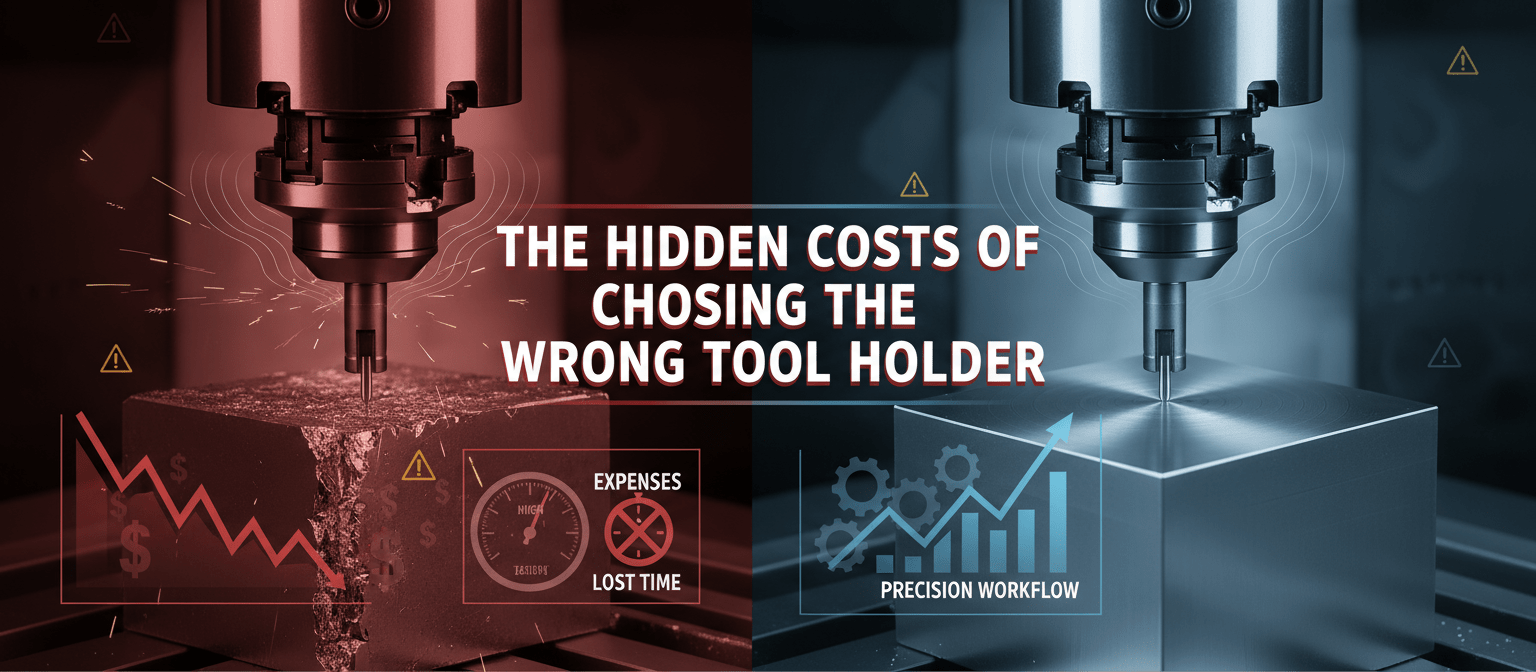
Every procurement manager understands the pressure of keeping production costs low. However, the wrong tool holder—even if seemingly cost-effective—can create a chain reaction of inefficiency, hidden expenses, and reduced output quality.
In modern CNC machining, the precision of the tool holder determines how effectively power, accuracy, and stability are transmitted from spindle to cutting edge.
Beyond the Purchase Price: The Real Cost Equation
The lowest-priced holder often results in higher long-term costs due to poor precision, increased vibration, and frequent replacements.
In high-speed machining, even a 0.01 mm runout deviation can cause tool breakage, leading to scrap material and rework costs. Over hundreds of machining cycles, these errors accumulate into substantial financial losses.
Procurement professionals should calculate the total cost per machining hour, factoring in tool wear, downtime, and quality yield rate—not just the purchase price of the holder.
How Runout Impacts Profitability
Excessive runout increases tool wear, reduces dimensional consistency, and forces operators to slow feed rates—hurting productivity.
Studies show that runout above 0.005 mm can shorten carbide tool life by 30–40%. It also raises spindle load, which increases maintenance frequency.
When evaluating suppliers, request documented runout test results. Choose holders that guarantee ≤0.003 mm accuracy, especially for finishing or high-speed operations.
Downtime and Maintenance: The Hidden Production Killer
Unreliable tool holders cause frequent stoppages for recalibration or cleaning, disrupting production flow.
In continuous production environments, each unplanned hour of downtime can cost thousands of dollars in idle labor and lost output.
Procurement should favor designs that offer easy balance adjustment, anti-corrosion treatment, and compatible interfaces (BT, HSK, CAT). These features extend uptime and simplify maintenance.
The Supply Chain Factor
Supplier reliability directly affects manufacturing continuity. Delays in tool holder delivery can stall production and customer orders.
Manufacturers with diversified supply networks report up to 25% fewer disruptions caused by late tooling shipments.
Procurement departments should audit supplier logistics, checking average lead time and emergency support capacity. A dependable supplier ensures consistent quality and delivery under tight schedules.
Conclusion: Precision Is Profit
Choosing the right tool holder is not a technical luxury—it’s a financial decision. Precision, durability, and supplier reliability directly determine the cost efficiency of CNC operations.
For distributors and manufacturers seeking a trusted CNC tool holder supplier, Ann Way Machine Tools Co., Ltd. provides ISO-certified, precision-balanced tool holders designed for long-term accuracy and cost savings. With decades of industry experience and global logistics support, Ann Way helps procurement managers reduce hidden costs and achieve reliable machining performance.
 B2B Tool Online