
How L/D Ratios and Damping Technologies Define Tool Holder Selection in 2026
Posted: March 3, 2026 Filed under: Industrial, Manufacturer | Tags: tool holder Leave a comment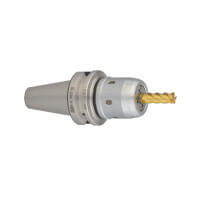
In the realm of high-precision manufacturing, the margin between a perfect component and a scrapped piece of metal is often measured in microns. For aerospace engineers, mold makers, and automotive component manufacturers, the challenge has shifted from simply “cutting metal” to “managing dynamics.” As component designs become increasingly aggressive—featuring deeper cavities, complex organic shapes, and thinner walls—the traditional approach to tooling is failing.
The culprit is vibration. Specifically, the self-excited vibration known as chatter. While often blamed on the machine tool or the cutting insert, the root cause frequently lies in the interface between the spindle and the cutter: the Tool Holder.
This comprehensive analysis explores the physics of machining instability, the critical importance of Length-to-Diameter (L/D) ratios, and how modern damping technologies in tool holders are solving the problems of deep cavity and thin-wall machining.
The Physics of Machining Vibration: More Than Just Noise
To understand why tool holders matter, we must first understand what happens during the cutting process. When a milling cutter engages with a workpiece, it is not a continuous, smooth action. It is a series of violent impacts. Each tooth entry generates a force that deflects the tool.
1. Forced Vibration vs. Regenerative Chatter
- Forced Vibration: This is caused by periodic forces such as the impact of the cutting teeth or an unbalanced tool holder. It is generally predictable and scales with RPM.
- Regenerative Chatter: This is the silent killer of productivity. It occurs when the frequency of the cutting process aligns with the natural frequency of the machine-tool system. The tool begins to bounce, cutting a wavy surface. On the next pass, the tool encounters these waves, and the vibration amplifies itself (regenerates) until it screams.
2. The Role of Stiffness and Damping
The ability of a system to resist this chatter is defined by its Dynamic Stiffness. This is composed of two factors:
- Static Stiffness: How much the tool bends under a steady load (determined by material and geometry).
- Damping: How quickly the system absorbs and dissipates vibration energy.
Standard tool holders offer reasonable static stiffness but very low damping. This is why, as we push the physical limits of overhang, standard holders fail.
The Tyranny of the L/D Ratio
The Length-to-Diameter (L/D) ratio is the single most critical factor in deep cavity machining. It describes how far the tool sticks out relative to its thickness.
The physics of a cantilever beam (which is essentially what a tool holder is) dictates that static stiffness is inversely proportional to the cube of the length (L^3).
- L/D = 3x (e.g., 30mm diameter sticking out 90mm): This is the industry baseline. Most standard steel tool holders (Side Lock, ER Collet) can handle this without issue.
- L/D = 5x: stiffness has dropped significantly. Deflection is now 16 times greater than at 2.5x. Without runout control (under 3 microns), vibration is inevitable.
- L/D = 10x: stiffness is now 1/1000th of a short tool. At this length, standard steel behaves like a tuning fork. Machining is impossible without specialized vibration-damping technology.
The Thin-Wall Complication
When machining thin-wall parts (common in aerospace structures like ribs and spars), the problem doubles. Not only is the tool vibrating, but the workpiece itself acts like a diaphragm. If the tool holder cannot dampen the excitation forces, it excites the natural frequency of the thin wall, leading to varying wall thickness and poor surface finish.
Advanced Tool Holder Designs: The Engineering Solutions
To combat the laws of physics at high L/D ratios, manufacturers have developed three primary classes of solutions.
1. Material Science: The Carbide Advantage
For L/D ratios between 4x and 6x, replacing the steel shank with Cemented Carbide is the most effective passive solution. Carbide has a Young’s Modulus (stiffness) of approximately 600 GPa, compared to steel’s 210 GPa. This means a carbide tool holder is nearly three times more rigid than a steel one of the same dimensions. This inherent rigidity resists the initial deflection that starts the chatter cycle.
2. Contact Mechanics: Dual-Contact Systems
Standard tapered tool holders (like BT or CAT) only contact the spindle on the taper. At high speeds or heavy loads, the centrifugal force expands the spindle bell, causing the holder to be pulled back, losing axial accuracy.
Dual-Contact systems (such as BBT, BCV, or Dual-Face HSK) contact both the taper and the spindle face. This provides a wider base of support, significantly increasing Radial Rigidity. For deep cavity work, this prevents the “tilting” of the holder inside the spindle, which is a primary cause of runout at the tool tip.
3. Active and Passive Damping Mechanisms
For L/D ratios exceeding 6x to 10x+, stiffness alone is not enough. You need damping.
- Friction Damping: These holders use internal mechanisms where multiple parts rub against each other during vibration, converting kinetic energy into heat.
- Tuned Mass Dampers (TMD): The gold standard for long-reach boring. A heavy mass is suspended inside the tool body by rubber or fluid elements. The mass is “tuned” to vibrate at the same frequency as the chatter but in the opposite phase (180 degrees out of phase). This cancels out the vibration, effectively silencing the tool.
The Impact on Surface Finish and Tolerances
Implementing high-performance tool holders isn’t just about noise reduction; it directly correlates to part quality.
- Surface Roughness (Ra): Vibration causes “chatter marks” or “scales” on the surface. Eliminating this reduces the need for manual polishing, which is often the most expensive bottleneck in mold making.
- Dimensional Accuracy: A vibrating tool cuts a larger hole than intended. In precision boring, a damped tool holder is the only way to hold H7 tolerances at deep depths.
Global Leaders in Vibration Control (Top 5 Manufacturers)
Selecting the right partner is crucial. Here are five global manufacturers, each offering distinct approaches to solving vibration challenges in Tool Holders.
1. Sandvik Coromant
A pioneer in the field, Sandvik is famous for its Silent Tools™ technology. Their adapters feature a pre-tuned dampening mechanism inside the tool body. They are particularly dominant in turning and boring operations involving extreme overhangs (up to 14xD), providing stable cutting where others fail.
Visit Website: https://www.sandvik.coromant.com/
2. Ann Way Machine Tools
Ann Way focuses on structural rigidity and high-speed precision. Their ADS (Ann Way Dynamic System) tool holders feature a unique nut-less design to reduce wind shear and vibration at high RPMs. Additionally, their AMG Series utilizes dual-contact technology to maximize clamping force and stiffness, making them a high-value choice for mold makers dealing with deep cavities.
Visit Website: https://www.annwaytools.com/
3. BIG DAISHOWA
Recognized globally for the BIG-PLUS spindle system, BIG DAISHOWA offers the Smart Damper line. This technology integrates a passive damping mechanism close to the cutting edge, which is highly effective for milling applications. Their focus is on minimizing runout to sub-micron levels to prevent vibration before it starts.
Visit Website: https://www.bigdaishowa.com/
4. Haimer
Haimer is the market leader in Shrink Fit technology. While shrink fit provides excellent concentricity, Haimer has evolved the technology with their Heavy Duty and Power Shrink Chucks, which feature thicker walls and vibration-dampening profiles (like the Safe-Lock system) to prevent tool pull-out and reduce harmonic resonance.
Visit Website: https://www.haimer.com/
5. Kennametal
Kennametal offers a versatile range of vibration-free boring bars and milling adapters. Their systems often feature tunable mechanisms that allow operators to adjust the damping frequency to match the specific setup, providing flexibility for job shops handling a wide variety of materials and lengths.
Visit Website: https://www.kennametal.com/
Conclusion: The New Standard for 2026
As we move further into 2026, the complexity of machined parts will not decrease. The demand for lightweighting (thin walls) and integrated structures (deep cavities) will only grow. In this landscape, the Tool Holder ceases to be a commodity. It becomes a strategic technology component.
Engineers and procurement managers must move beyond the “price per holder” mindset. Instead, they must evaluate the “physics per dollar.” Does this holder allow me to run at full speed at 8xD? Does it protect my workpiece from chatter marks? By understanding the science of L/D ratios and selecting the right damping technology, manufacturers can turn their most difficult machining challenges into their competitive advantage.
Choosing the Best End Mill for Aluminum Machining
Posted: February 11, 2025 Filed under: Industrial, Manufacturer | Tags: aluminum end mill, aluminum machining, end mill, rough end mill Leave a commentWhen machining aluminum, selecting the right end mill is a game-changer. This lightweight, corrosion-resistant material is highly machinable, but it demands precision in tool choice to achieve optimal results. Here’s a breakdown of the key features and recommendations for choosing the perfect end mill for aluminum.
Material of the End Mill
Carbide end mills are the go-to choice for aluminum machining. Why? They boast superior wear resistance, thermal stability, and rigidity compared to high-speed steel (HSS) or cobalt options. Carbide tools not only last longer but also enable faster cutting speeds, boosting productivity and trimming costs. If you’re in it for the long haul, carbide is your best bet.
Coatings: The Secret Sauce
While uncoated end mills can handle aluminum decently, coatings elevate performance to a whole new level. Diamond-like carbon (DLC) coatings, for instance, offer exceptional surface hardness and low friction, making them ideal for high-speed operations. Polycrystalline diamond (PCD) coatings? They’re the heavyweights for high-volume production, delivering unmatched wear resistance and tool longevity.
Geometry: It’s All About the Angles
Geometry is where the magic happens. A high helix angle, typically between 40° and 45°, is a must. This design ensures efficient chip evacuation, minimizes heat buildup, and prevents the dreaded chip re-cutting. Flute count matters too—two or three flutes are standard for aluminum, providing ample chip space and smooth evacuation. Don’t overlook sharp cutting edges with a positive rake angle; they’re essential for reducing cutting forces and achieving a flawless finish.
Tool Diameter and Length: Size Matters
The tool’s diameter and length can make or break your machining process. Larger diameters enhance rigidity and reduce deflection, improving surface finish and extending tool life. However, they may require slower speeds and generate higher forces. As for length, shorter tools are better. They minimize deflection and vibration, ensuring stability. Stick to a length-to-diameter ratio of no more than 4:1 for best results.
Chip Management: Keep It Clean
Efficient chip management is crucial. Features like polished flutes, variable helix designs, or chip-breaking elements are your allies in preventing chip re-cutting and built-up edge formation. These enhancements not only streamline the process but also protect your tool and workpiece.
Final Thoughts
Choosing the right end mill for aluminum isn’t just about picking a tool—it’s about optimizing your entire machining process. By focusing on material, coatings, geometry, size, and chip management, you can achieve superior results and extend tool life. Whether you’re a seasoned machinist or a newcomer, these insights will set you on the path to success.
Are you searching for the ideal aluminum roughing end mill to enhance your machining efficiency? You can consider the APAL Bullet-Shaped Design End Mill from JLC is engineered to address these needs effectively. Its bullet-shaped design enhances slop processing and large-angle cutting, making it particularly suitable for rough milling applications. Manufactured from a German special carbide round bar and coated with premium DLC, this end mill effectively prevents aluminum chip adhesion, ensuring longer tool life and superior workpiece surface quality. For more detailed information and specifications, you can visit Jin Li Cheng Cutting Tool Co., Ltd.

Tractor Spare Parts: Key Considerations for Optimal Performance
Posted: November 8, 2024 Filed under: Industrial, Manufacturer | Tags: agricultural spare parts, customized service, tractor parts, tractor spare parts Leave a commentIn the world of agriculture, tractors are indispensable machines that significantly enhance productivity and efficiency. However, the performance and longevity of these vital machines largely depend on the quality and compatibility of the spare parts they are equipped with. Selecting the right tractor spare parts is not just about keeping the machine operational; it’s about optimizing performance, ensuring safety, and maximizing the return on investment. This comprehensive guide aims to provide a detailed roadmap for choosing the right tractor spare parts for your agricultural needs.
Understanding Your Tractor’s Requirements
The first step in selecting the right tractor parts is understanding your tractor’s specific requirements. This involves identifying the make and model of your tractor, as each model may have unique specifications and part requirements (AgTractorParts). Knowing the specific make and model is crucial because it ensures that the parts you choose will fit perfectly and function optimally.
Assess Your Agricultural Needs
Consider the type of work your tractor performs. Different farming tasks may require specific parts designed for optimal performance under certain conditions (AgTractorParts). For instance, tractors used for heavy-duty tasks may need more robust components compared to those used for lighter tasks.
Prioritizing Quality Over Price
When it comes to tractor spare parts, quality should always take precedence over price. High-quality parts may come with a higher price tag, but they often lead to longer lifespans, better performance, and reduced downtime, which can save money in the long run (AgTractorParts). Look for parts that meet or exceed industry standards and certifications, as these are indicators of quality and reliability.
Compatibility Is Key
Ensuring compatibility is crucial when selecting spare parts. Incompatibility can lead to poor performance, damage to the tractor, and potentially void warranties (AgTractorParts). Understanding the difference between Original Equipment Manufacturer (OEM) parts and aftermarket parts is essential. OEM parts are made by the tractor’s manufacturer, ensuring a perfect fit and optimal performance, while aftermarket parts can offer a cost-effective alternative without compromising on quality (TractorSpareParts).
OEM vs. Aftermarket Parts
OEM parts are identical components used in the initial construction of your tractor, designed and produced by the same brand that made the machine. Their hallmark is compatibility and consistency, ensuring your tractor operates as originally intended (TractorSpareParts). On the other hand, aftermarket parts are produced by third-party companies and offer a range of options for customization or replacement, sometimes at a more attractive price point but with varying levels of quality and compatibility (MahindraUSA).
Evaluating Suppliers
Choosing the right supplier is as important as choosing the right parts. Look for suppliers with a good reputation, positive reviews, and a history of providing high-quality parts. Consider their customer service, return policies, and the availability of expert advice (AgTractorParts). While local suppliers offer the advantage of in-person inspections and immediate availability, online suppliers can provide a wider selection and competitive pricing. Consider what matters most for your needs.
The Role of Technology and Innovation
Staying up-to-date with technology in agriculture is crucial. Parts that incorporate the latest technological advancements can enhance the performance and efficiency of your tractor. For instance, modern hydraulic systems or advanced engine components can significantly improve operational efficiency (Simpli).
Warranty and Support
Another important aspect to consider is the warranty. OEM parts typically come with a warranty backed by the tractor’s manufacturer, providing added peace of mind and protection for your investment (MahindraUSA). Aftermarket parts may also come with warranties, but it is crucial to understand the terms and conditions to avoid voiding your tractor’s warranty.
Ensuring Maximum Efficiency with High-Quality Parts
Using high-quality spare parts ensures maximum efficiency and longevity of your tractor. Genuine parts are made specifically for your tractor model, ensuring seamless integration and optimal functionality (TractorSpareParts). High-quality materials and manufacturing standards make genuine parts more durable, reducing the frequency of replacements and repairs.
Conclusion
Choosing the right tractor spare parts is a critical decision that can significantly impact the performance and longevity of your tractor. By understanding your tractor’s specific requirements, prioritizing quality over price, ensuring compatibility, evaluating suppliers, and staying abreast of technological advancements, you can make informed decisions that enhance your tractor’s efficiency and reliability. Remember, investing in high-quality parts today can save you time and money in the future, ensuring that your tractor remains a dependable asset to your farming operations.
Comprehensive Overview of Nylon Yarn
Posted: October 21, 2024 Filed under: Industrial, Manufacturer, Textile | Tags: nylon 6 yarn, nylon 66 yarn, nylon yarn Leave a commentNylon yarn, a synthetic fiber, has become an integral component in various industries due to its remarkable properties such as strength, elasticity, and durability. Initially developed by DuPont in the 1930s, nylon has evolved into a versatile material used in textiles, automotive, and industrial applications. This report delves into the properties, production processes, applications, and market trends of nylon yarn, providing a thorough understanding of its significance in modern industries.
Properties of Nylon Yarn
Physical Properties
Nylon is known for its high tenacity, with dry strength ranging from 4.6 to 8.8 grams per denier (g/d), though it experiences a 10-20% reduction in strength when wet (YarnsandFibers). It exhibits excellent elasticity, capable of elongating between 16% and 50%, and has superior elastic recovery due to the strong hydrogen bonds in its structure (Xometry). Nylon is lightweight, with a density of approximately 1.14 grams per cubic centimeter, and has a moisture regain of 2.5-5.0%, making it relatively non-absorbent (YarnsandFibers).
Chemical Properties
Nylon demonstrates good resistance to mild acids and alkalis, though it can be damaged by strong acids (YarnsandFibers). It also resists moths, mildew, and rot, but has moderate resistance to sunlight, which can lead to degradation over time (YarnsandFibers).
Thermal Properties
As a thermoplastic fiber, nylon can be heat set, which enhances its resiliency and dimensional stability. This property is particularly beneficial in applications where shape retention is crucial (YarnsandFibers).
Types of Nylon
Nylon fibers are categorized by the number of carbon atoms in their molecular structure, resulting in various types such as Nylon 6, Nylon 6,6, Nylon 11, and Nylon 12. Each type offers distinct properties suitable for specific applications (The Textile Journal).
Production Process
Nylon yarn production begins with the polymerization of petrochemicals like coal and petroleum. The resulting polymer is melted and extruded through spinnerets to form fibers, which are then stretched, heat-set, and textured to achieve desired properties (ScienceInfo). This process allows for the creation of both continuous filament yarns and staple fibers, which can be spun into yarns of varying compositions (Tonia Knits).
Applications of Nylon Yarn
Textile Industry
Nylon’s strength, elasticity, and moisture-wicking properties make it ideal for apparel, including activewear, hosiery, and lingerie. It is also used in home textiles like carpets and upholstery due to its durability and stain resistance (AYM Syntex).
Automotive and Industrial Uses
In the automotive sector, nylon is used for seat covers, airbags, and tire reinforcements, where its lightweight and durable nature is advantageous. Industrial applications include ropes, nets, and safety harnesses, benefiting from nylon’s high tensile strength and abrasion resistance (TextileEngineering).
Other Applications
Nylon is also employed in the production of fishing lines, medical sutures, and sports equipment, highlighting its versatility across diverse fields (TextileDetails).
Market Trends
Growth and Opportunities
The nylon yarn market is experiencing steady growth, driven by the expanding textile, automotive, and packaging industries. Innovations in production techniques, such as the use of recycled materials, are enhancing the sustainability of nylon yarn, aligning with increasing consumer demand for eco-friendly products (MarketResearchIntellect).
Challenges
Despite its positive outlook, the market faces challenges such as raw material price volatility and environmental concerns associated with petrochemical-based products. Addressing these issues through sustainable practices and technological advancements is crucial for continued growth (MarkwideResearch).
Regional Analysis
The nylon yarn market exhibits regional variations in consumption and production, with significant activity in North America, Europe, and Asia-Pacific. These regions are key players due to their robust textile and automotive industries (QYResearch).
Conclusion
Nylon yarn remains a vital material across various industries due to its unique combination of properties. As the market evolves, focusing on sustainability and innovation will be essential for manufacturers and stakeholders to capitalize on emerging opportunities. The ongoing demand for high-performance materials in textiles, automotive, and industrial applications underscores the importance of nylon yarn in the global market.
Understanding Oil Mist and the Need for Effective Collection
Posted: October 17, 2024 Filed under: Industrial, Manufacturer | Tags: mist collector, oil mist air cleaner, oil mist collector Leave a commentIn many industrial settings, such as CNC machining, grinding, and metalworking operations, oil mist is a common byproduct. This mist is created when coolant or oil is used during machining processes, generating fine droplets that can become airborne. These particles pose several risks in workshops, including air contamination, equipment damage, and health hazards for workers. This is where oil mist air cleaners and industrial air cleaners play a crucial role in maintaining a safe and efficient working environment.
Why Oil Mist Collectors Are Essential
The accumulation of oil mist in the air can have significant consequences. It can lead to slippery floors, damage sensitive electronics, and even increase the risk of fires. Additionally, prolonged exposure to airborne oil mist can result in respiratory issues for workers. To prevent these hazards, businesses often rely on oil mist collectors to capture and filter the mist before it circulates through the workshop.
Types of Oil Mist Collectors
Several types of oil mist filtration systems cater to different industrial needs:
- Coolant mist collectors: These devices are specifically designed to remove coolant mist from the air, which is commonly found in machining operations.
- Small mist collectors: Ideal for confined spaces or smaller machinery, these compact units provide effective mist collection in workshops with limited space.
- Industrial air filter cleaning machines: These machines ensure continuous air filtration by cleaning or replacing filters as needed.
- Industrial HEPA air filters: High-efficiency particulate air (HEPA) filters are often used in mist collection systems to capture fine particles, ensuring clean air in the workshop.
Benefits of Oil Mist Extraction Systems
Using an oil mist extractor has multiple advantages:
- Improved air quality: A high-quality workshop air filtration system can significantly reduce the concentration of harmful particles, leading to cleaner and healthier air.
- Extended equipment life: Coolant mist filters and oil mist extraction systems prevent oil mist from settling on machinery, reducing wear and tear and prolonging the lifespan of the equipment.
- Enhanced safety: Effective mist collection minimizes the risk of slip-and-fall accidents and reduces fire hazards by keeping oil mist under control.
LOMA: Your Trusted Oil Mist Collector Manufacturer
When it comes to finding a reliable oil mist collector manufacturer, Lotus Innovation Technology Co., Ltd. (LOMA) stands out for its high-quality oil mist filtration systems. Whether you need a coolant mist collector, a compact small mist collector, or an advanced industrial air filter cleaning machine, LOMA offers tailored solutions that fit seamlessly with various machine tools. Their oil mist collectors are designed to enhance air quality, protect equipment, and improve workplace safety.
For companies looking to optimize their mist collection systems, LOMA’s expertise and innovative designs make them a trusted partner. Get in touch with LOMA to explore how their oil mist air cleaners can improve the efficiency and safety of your workshop.

The best partner of oil mist collector manufacturer for your workshop—LOMA
Taichung, TAIWAN – A Successful Close of TMTS • Fruitful Results for Buyers Home and Abroad
Posted: December 6, 2018 Filed under: Exhibition Information, Industrial | Tags: TMTS, TMTS 2018 Leave a comment2018 Taiwan International Machine Tool Show (TMTS) has come to a successful conclusion. Exhibitors are fully committed to demonstrating complete and diversified manufacturing services. The intelligent functions and automated production lines are a key focus. The overall scales of the exhibition and the number of visitors have both reached record highs.
In response to the development of Industry 4.0, Taiwan’s machine tool and accessory manufacturers provide complete and diversified industrial solutions to meet the different needs of their customers. Firstly, for high-value-added industries with small-quantity but diversified production, intelligent functions such as temperature rise compensation, collision avoidance, and real-time monitoring of key components have been introduced. Secondly, for the general metal processing industry which pursues efficiency and mass production, the machine tool and accessory manufacturers have showcased various automated manufacturing cells and production lines. Furthermore, the R&D results of process conditions optimization, environmental protection and energy saving, and improved processing quality and stability can be seen in the exhibition as well.
The domestic large-scale manufacturers are in this TMTS. Their exhibits focus on processing machines such as multifunctional composite processing machines, machining centers, and automated production lines, etc., and key components equipped with remote monitoring functions to monitor the production site and improve production efficiency. Moreover, a variety of emerging materials are displayed such as ultrasonic processing of hard and brittle materials and composite materials. Visitors at the show can get a bird’s eye view of the products and technology using these new materials.
The production management system of YCM and TONGTAI can be used to connect various automation and intelligent software and hardware devices to help manufacturers strengthen the whole plant management and the intelligent internal performance of the machine. The equipment management information system exhibited by TAICHUNG VICTOR provides customers with machine monitoring and production information collection through smart functions such as production line screen, utilization rate, cutting tool life inspection, alarm record, and production report, etc. HIWIN presents intelligent ball screw which can remote monitor the preload, temperature, vibration and lubrication state.
Taiwan Machine Tool & Accessory Builders’ Association (TMBA)
Contact Person: Elisa Li
Tel.: +886-4-2350-7583
Email: tmts2018@tmba.org.tw
Website: https://www.tmts.tw/en/
Find Out Ideal Angle Head Holders? Recommend You SYIC Tool Holder Manufacturer!
Posted: October 24, 2018 Filed under: Industrial, Manufacturer | Tags: angle head holders, CNC machining parts, tool holders Leave a comment
Founded in 1979, SYIC has accumulated 30 years of technology and experience, specializing in research and development, design and manufacture of arbors, collets, angle head holders, boring heads, cutting tools, CNC machining parts and components. They have built the SYIC brand with their very own manufacture and sales to ensure the production and products are all rigorously controlled and tested, with every product reaching the highest quality in service to every customer at home and abroad.
To ensure every product delivered has the highest quality, besides the cutting-edge production equipment, SYIC has also introduced a variety of measurement equipment for quality assurance and improvement at all times.
SYIC products demand precision, quality and versatility. The R&D team is dedicated to innovation and has acquired many patents from around the world, catering to the changing markets.
Their dedication to research and development has brought state-of-the-art industrial components to their customers, in a very successful global marketing manner. They have consolidated the SYIC brand in the machine tool industry, and become a loyal partner of our customers with their excellent products and services.
If you are looking for high-quality angle head holders, boring heads, collet chucks, or shrink fit chucks, please do not miss Shin-Yain Industrial Co., Ltd. – they can always meet your requirements of tool holders.
Shin-Yain Industrial Co., Ltd.
No.198, Jingpu Rd., Qingshui Dist., Taichung City 436, Taiwan
Tel: +886-4-26237575
Fax: +886-4-26237676
E-mail: sales@syic.com
GRECO 2018 – ISOTHANE TPU Allowing Prospects of Eco-Friendly and Light Weight Options
Posted: September 27, 2018 Filed under: Industrial, Manufacturer | Tags: apliphatic grade, GRECO, TPU engineering grade, TPU resin Leave a commentIn the category of TPU resins, GRECO has released products that could replace rubber used in outsoles for footwear manufacturing. “The purpose for TPU replacing traditional raw materials is to on one hand expand eco-solutions, and the other reduce processing time while improve the actual performances of the end-production” Greco explained. Other replacement includes the introduction of ISOTHANE Calendar Sries. ISOTHANE Calendar replaces PVC in making synthetic leathers. The primary advantage is that the finish would increase the abrasive resistant level as well as flame resistant capacity.
ISOTHANE 7000 Series Aliphatic Grade is another refined series that has non-yellowing features, low temperature flexibility and excellent resilience property. These new features will lead the way of numerous practical uses for TPUs, such as the protection films of automobiles.
GRECO emphasized their future development roadmap for TPU would be in polishing the R&D in expanded-TPU. The goal is to make expanded-TPU into pellets and let them expand through microcellular process, which would be applicable for injection machines to produce environmentally friendly foam TPU. Foam TPU has the resilience over 60% while it maintains flexibility in low temperature. “This product will be extremely beneficial for light-weight solutions and applications in the energy industry” GRECO indicated.
More pioneering projects are being tested between GRECO and their customers. In 2017 GRECO explored new markets for TPUs, one including using corn-extracted bio-based in making TPU bibs with Sweden customers for the Chinese market. The other practice is to use long fiber reinforced thermoplastic on the wind turbines, which would then protect the turbines from wind resistance, and prolong the life-cycle. The advantages are that the long fiber reinforced TPU has great tensile strength to withstand the wind resistance while being much lighter than metal, and the design could be highly accurate in fitting the turbines.
The final development for TPU will be in promoting engineering grade application: ISOTHANE 8000 are TPU engineering grades that appear to be property-suitable for extruder and injection molding applications. “We are expecting the increase adoption in electronics, automobile, hand tools, home appliance, medical gadgets, optical products, and so on” GRECO remarked.
 Duke Shih / Angie Lai
Tel: +886-4-2358-7676 Ext: 620
Email: duke@greco.com.tw
 B2B Tool Online