
How L/D Ratios and Damping Technologies Define Tool Holder Selection in 2026
Posted: March 3, 2026 Filed under: Industrial, Manufacturer | Tags: tool holder Leave a comment
In the realm of high-precision manufacturing, the margin between a perfect component and a scrapped piece of metal is often measured in microns. For aerospace engineers, mold makers, and automotive component manufacturers, the challenge has shifted from simply “cutting metal” to “managing dynamics.” As component designs become increasingly aggressive—featuring deeper cavities, complex organic shapes, and thinner walls—the traditional approach to tooling is failing.
The culprit is vibration. Specifically, the self-excited vibration known as chatter. While often blamed on the machine tool or the cutting insert, the root cause frequently lies in the interface between the spindle and the cutter: the Tool Holder.
This comprehensive analysis explores the physics of machining instability, the critical importance of Length-to-Diameter (L/D) ratios, and how modern damping technologies in tool holders are solving the problems of deep cavity and thin-wall machining.
The Physics of Machining Vibration: More Than Just Noise
To understand why tool holders matter, we must first understand what happens during the cutting process. When a milling cutter engages with a workpiece, it is not a continuous, smooth action. It is a series of violent impacts. Each tooth entry generates a force that deflects the tool.
1. Forced Vibration vs. Regenerative Chatter
- Forced Vibration: This is caused by periodic forces such as the impact of the cutting teeth or an unbalanced tool holder. It is generally predictable and scales with RPM.
- Regenerative Chatter: This is the silent killer of productivity. It occurs when the frequency of the cutting process aligns with the natural frequency of the machine-tool system. The tool begins to bounce, cutting a wavy surface. On the next pass, the tool encounters these waves, and the vibration amplifies itself (regenerates) until it screams.
2. The Role of Stiffness and Damping
The ability of a system to resist this chatter is defined by its Dynamic Stiffness. This is composed of two factors:
- Static Stiffness: How much the tool bends under a steady load (determined by material and geometry).
- Damping: How quickly the system absorbs and dissipates vibration energy.
Standard tool holders offer reasonable static stiffness but very low damping. This is why, as we push the physical limits of overhang, standard holders fail.
The Tyranny of the L/D Ratio
The Length-to-Diameter (L/D) ratio is the single most critical factor in deep cavity machining. It describes how far the tool sticks out relative to its thickness.
The physics of a cantilever beam (which is essentially what a tool holder is) dictates that static stiffness is inversely proportional to the cube of the length (L^3).
- L/D = 3x (e.g., 30mm diameter sticking out 90mm): This is the industry baseline. Most standard steel tool holders (Side Lock, ER Collet) can handle this without issue.
- L/D = 5x: stiffness has dropped significantly. Deflection is now 16 times greater than at 2.5x. Without runout control (under 3 microns), vibration is inevitable.
- L/D = 10x: stiffness is now 1/1000th of a short tool. At this length, standard steel behaves like a tuning fork. Machining is impossible without specialized vibration-damping technology.
The Thin-Wall Complication
When machining thin-wall parts (common in aerospace structures like ribs and spars), the problem doubles. Not only is the tool vibrating, but the workpiece itself acts like a diaphragm. If the tool holder cannot dampen the excitation forces, it excites the natural frequency of the thin wall, leading to varying wall thickness and poor surface finish.
Advanced Tool Holder Designs: The Engineering Solutions
To combat the laws of physics at high L/D ratios, manufacturers have developed three primary classes of solutions.
1. Material Science: The Carbide Advantage
For L/D ratios between 4x and 6x, replacing the steel shank with Cemented Carbide is the most effective passive solution. Carbide has a Young’s Modulus (stiffness) of approximately 600 GPa, compared to steel’s 210 GPa. This means a carbide tool holder is nearly three times more rigid than a steel one of the same dimensions. This inherent rigidity resists the initial deflection that starts the chatter cycle.
2. Contact Mechanics: Dual-Contact Systems
Standard tapered tool holders (like BT or CAT) only contact the spindle on the taper. At high speeds or heavy loads, the centrifugal force expands the spindle bell, causing the holder to be pulled back, losing axial accuracy.
Dual-Contact systems (such as BBT, BCV, or Dual-Face HSK) contact both the taper and the spindle face. This provides a wider base of support, significantly increasing Radial Rigidity. For deep cavity work, this prevents the “tilting” of the holder inside the spindle, which is a primary cause of runout at the tool tip.
3. Active and Passive Damping Mechanisms
For L/D ratios exceeding 6x to 10x+, stiffness alone is not enough. You need damping.
- Friction Damping: These holders use internal mechanisms where multiple parts rub against each other during vibration, converting kinetic energy into heat.
- Tuned Mass Dampers (TMD): The gold standard for long-reach boring. A heavy mass is suspended inside the tool body by rubber or fluid elements. The mass is “tuned” to vibrate at the same frequency as the chatter but in the opposite phase (180 degrees out of phase). This cancels out the vibration, effectively silencing the tool.
The Impact on Surface Finish and Tolerances
Implementing high-performance tool holders isn’t just about noise reduction; it directly correlates to part quality.
- Surface Roughness (Ra): Vibration causes “chatter marks” or “scales” on the surface. Eliminating this reduces the need for manual polishing, which is often the most expensive bottleneck in mold making.
- Dimensional Accuracy: A vibrating tool cuts a larger hole than intended. In precision boring, a damped tool holder is the only way to hold H7 tolerances at deep depths.
Global Leaders in Vibration Control (Top 5 Manufacturers)
Selecting the right partner is crucial. Here are five global manufacturers, each offering distinct approaches to solving vibration challenges in Tool Holders.
1. Sandvik Coromant
A pioneer in the field, Sandvik is famous for its Silent Tools™ technology. Their adapters feature a pre-tuned dampening mechanism inside the tool body. They are particularly dominant in turning and boring operations involving extreme overhangs (up to 14xD), providing stable cutting where others fail.
Visit Website: https://www.sandvik.coromant.com/
2. Ann Way Machine Tools
Ann Way focuses on structural rigidity and high-speed precision. Their ADS (Ann Way Dynamic System) tool holders feature a unique nut-less design to reduce wind shear and vibration at high RPMs. Additionally, their AMG Series utilizes dual-contact technology to maximize clamping force and stiffness, making them a high-value choice for mold makers dealing with deep cavities.
Visit Website: https://www.annwaytools.com/
3. BIG DAISHOWA
Recognized globally for the BIG-PLUS spindle system, BIG DAISHOWA offers the Smart Damper line. This technology integrates a passive damping mechanism close to the cutting edge, which is highly effective for milling applications. Their focus is on minimizing runout to sub-micron levels to prevent vibration before it starts.
Visit Website: https://www.bigdaishowa.com/
4. Haimer
Haimer is the market leader in Shrink Fit technology. While shrink fit provides excellent concentricity, Haimer has evolved the technology with their Heavy Duty and Power Shrink Chucks, which feature thicker walls and vibration-dampening profiles (like the Safe-Lock system) to prevent tool pull-out and reduce harmonic resonance.
Visit Website: https://www.haimer.com/
5. Kennametal
Kennametal offers a versatile range of vibration-free boring bars and milling adapters. Their systems often feature tunable mechanisms that allow operators to adjust the damping frequency to match the specific setup, providing flexibility for job shops handling a wide variety of materials and lengths.
Visit Website: https://www.kennametal.com/
Conclusion: The New Standard for 2026
As we move further into 2026, the complexity of machined parts will not decrease. The demand for lightweighting (thin walls) and integrated structures (deep cavities) will only grow. In this landscape, the Tool Holder ceases to be a commodity. It becomes a strategic technology component.
Engineers and procurement managers must move beyond the “price per holder” mindset. Instead, they must evaluate the “physics per dollar.” Does this holder allow me to run at full speed at 8xD? Does it protect my workpiece from chatter marks? By understanding the science of L/D ratios and selecting the right damping technology, manufacturers can turn their most difficult machining challenges into their competitive advantage.
The Hidden Costs of Choosing the Wrong Tool Holder
Posted: January 7, 2026 Filed under: Manufacturer | Tags: tool holder, tool holders Leave a comment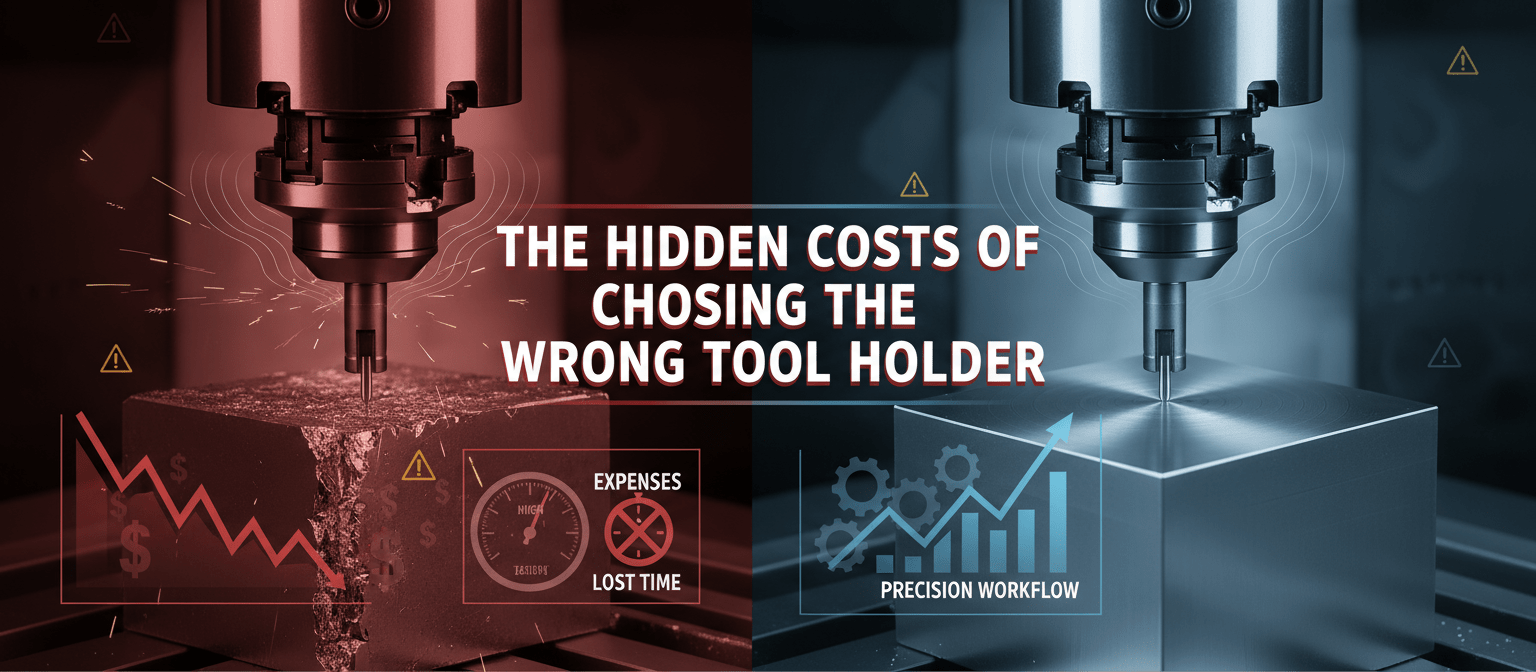
Every procurement manager understands the pressure of keeping production costs low. However, the wrong tool holder—even if seemingly cost-effective—can create a chain reaction of inefficiency, hidden expenses, and reduced output quality.
In modern CNC machining, the precision of the tool holder determines how effectively power, accuracy, and stability are transmitted from spindle to cutting edge.
Beyond the Purchase Price: The Real Cost Equation
The lowest-priced holder often results in higher long-term costs due to poor precision, increased vibration, and frequent replacements.
In high-speed machining, even a 0.01 mm runout deviation can cause tool breakage, leading to scrap material and rework costs. Over hundreds of machining cycles, these errors accumulate into substantial financial losses.
Procurement professionals should calculate the total cost per machining hour, factoring in tool wear, downtime, and quality yield rate—not just the purchase price of the holder.
How Runout Impacts Profitability
Excessive runout increases tool wear, reduces dimensional consistency, and forces operators to slow feed rates—hurting productivity.
Studies show that runout above 0.005 mm can shorten carbide tool life by 30–40%. It also raises spindle load, which increases maintenance frequency.
When evaluating suppliers, request documented runout test results. Choose holders that guarantee ≤0.003 mm accuracy, especially for finishing or high-speed operations.
Downtime and Maintenance: The Hidden Production Killer
Unreliable tool holders cause frequent stoppages for recalibration or cleaning, disrupting production flow.
In continuous production environments, each unplanned hour of downtime can cost thousands of dollars in idle labor and lost output.
Procurement should favor designs that offer easy balance adjustment, anti-corrosion treatment, and compatible interfaces (BT, HSK, CAT). These features extend uptime and simplify maintenance.
The Supply Chain Factor
Supplier reliability directly affects manufacturing continuity. Delays in tool holder delivery can stall production and customer orders.
Manufacturers with diversified supply networks report up to 25% fewer disruptions caused by late tooling shipments.
Procurement departments should audit supplier logistics, checking average lead time and emergency support capacity. A dependable supplier ensures consistent quality and delivery under tight schedules.
Conclusion: Precision Is Profit
Choosing the right tool holder is not a technical luxury—it’s a financial decision. Precision, durability, and supplier reliability directly determine the cost efficiency of CNC operations.
For distributors and manufacturers seeking a trusted CNC tool holder supplier, Ann Way Machine Tools Co., Ltd. provides ISO-certified, precision-balanced tool holders designed for long-term accuracy and cost savings. With decades of industry experience and global logistics support, Ann Way helps procurement managers reduce hidden costs and achieve reliable machining performance.
Why Your Machines Shake: The Complete Guide to Bearing Adapter Sleeves and Shaft Safety
Posted: December 16, 2025 Filed under: Adapter, Manufacturer Leave a commentA loose metal part smaller than your hand can cost a factory thousands of dollars in just one hour.
In the world of heavy machinery, we often focus on the big engines or the large conveyor belts. We look at the massive gears and the loud motors. But often, the reason a machine stops working is not because of the big parts. It is because of the small parts that hold everything together.
If you work in a factory, distribute parts, or manage machine maintenance, you know that “downtime” is a scary word. Downtime means the machine stops. When the machine stops, you lose money. Today, we are going to talk about a specific part that prevents this: the bearing adapter sleeve.
What is a Bearing Adapter Sleeve?
To understand an adapter sleeve, you first need to understand the bearing. A bearing is a ring that helps wheels and shafts turn smoothly. It reduces friction.
However, the metal rod (the shaft) that goes through the bearing is not always the perfect size. Sometimes the shaft is smooth, and sometimes it is “stepped” (it has different levels).
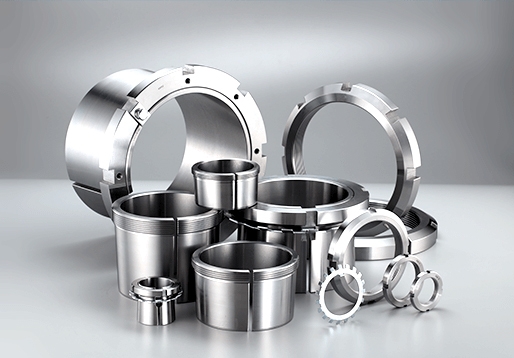
An adapter sleeve is a specialized metal tube. It goes between the bearing and the shaft. It has a slit cut through it, allowing it to squeeze tightly. When you tighten the nut on the sleeve, the sleeve grips the shaft very hard. This locks the bearing in place.
Think of it as the bridge that connects the moving bearing to the stationary shaft. If this bridge is weak, the machine will shake, rattle, and eventually break.
Why Do Adapter Sleeves Fail?
Adapter sleeves are simple parts, but they must be high quality. Here are the three main reasons they fail:
- Improper Installation: This is the most common reason. If you do not tighten the nut enough, the sleeve will slip. If you tighten it too much, you can crack the bearing inner ring.
- Poor Quality Materials: Some manufacturers use soft metal. Soft metal changes shape under heavy loads. Once the shape changes, the grip is lost.
- Wrong Sizing: If the sleeve does not match the shaft diameter perfectly, it cannot create a full grip. Even a gap of a hair’s width can cause vibration.
The Hidden Cost of Vibration
You might think a little shaking is okay. It is not. Vibration is the enemy of machinery.
When a bearing is not seated correctly on the adapter sleeve, it creates an imbalance, which sends shockwaves through the machine.
- It loosens bolts in other parts of the machine.
- It causes sensors to give wrong data.
- It creates heat, which destroys lubricants and grease.
Fixing the mounting issue is always cheaper than fixing the damage caused by vibration.
How to Choose the Right Adapter Sleeve
Not all sleeves are the same. When you look for a supplier or a manufacturer, you need to check three things:
1. Precision:
The sleeve must be perfectly round. If the sleeve is oval-shaped, the bearing will be oval-shaped. This causes noise and heat.
2. Material Strength:
The steel must be strong enough to handle the pressure of the lock nut, but flexible enough to grip the shaft. High-quality carbon steel is usually the best choice.3. Surface Finish:
The outside of the sleeve needs to be smooth, but the inside needs a specific texture to grip the shaft.
Maintenance Tips for Long Life
If you are a distributor selling to factories, or a user running machines, share these tips:
- Retighten after 24 hours: New installations often “settle.” Check the nut one day after installation.
- Listen to the machine: Use a stethoscope or vibration pen. If the sound changes, check the mounting immediately.
- Keep it dry: Rust can form between the sleeve and the shaft. This makes it impossible to remove the bearing later. Use high-quality sleeves with anti-rust coating if possible.
Why Quality Manufacturing Matters
The market is full of cheap parts. It is tempting to save a few dollars on an adapter sleeve. However, a cheap sleeve is often the hidden cause that destroys an expensive machine.
To understand why, we must look at what happens inside the metal.
1. The Hidden Weakness of Low-Grade Steel
On the outside, all adapter sleeves look shiny and new. But inside, the quality of the steel is different. Low-quality manufacturers often use recycled steel with inconsistent density. This steel may contain microscopic air bubbles or impurities.
When a machine runs at high speed, the centrifugal force puts immense pressure on the sleeve. High-quality steel holds its shape. Low-quality steel begins to stretch or deform. Once the metal deforms, the grip on the shaft is lost. The sleeve does not break immediately; it loosens slowly, causing invisible damage until it is too late.
2. The Danger of “False Tightness”
Precision in manufacturing threads is critical. In cheap manufacturing, the threads on the sleeve are often rough or slightly uneven.
When you install the lock nut, it feels tight. You verify it with your wrench. But this is a “false tight.” The nut is merely stuck against a rough spot on the thread, not actually clamping the bearing down.
After a few hours of operation, vibration smooths out that rough spot. Suddenly, the nut is loose. The bearing shifts, and the shaft gets damaged. A manufacturer who understands the physics of rotation ensures threads are perfectly smooth to prevent this error.
3. Consistency is Key
If you buy 100 adapter sleeves, every single one must be identical. Cheap manufacturers often have “tolerance” issues. This means Sleeve #1 might fit perfectly, but Sleeve #50 is slightly too thick, and Sleeve #99 is slightly oval-shaped.
The Chin Sing Solution: Engineering Safety for Your Machinery
This is where Chin Sing excels. Chin Sing Precision Industry Co., Ltd. is a dedicated manufacturer of bearing parts, including adapter sleeves, withdrawal sleeves, and lock nuts.
Chin Sing does not just sell metal tubes. They engineer safety solutions.
- High Precision: Their adapter sleeves are manufactured to strict international standards. This ensures they fit perfectly on shafts and inside bearings, reducing vibration and extending machine life.
- Durability: They use high-quality steel that resists deforming under high pressure. This means once you lock it, it stays locked.
- Wide Range: Whether you need standard sizes or specific hydraulic adapter sleeves for heavy-duty applications, Chin Sing has the capability to supply them.
Take Action Before the Machine Stops
Don’t wait for the rattling sound. Don’t wait for the production line to stop. Check your bearing adapter sleeves today.
If you are looking for a reliable partner who can provide high-quality bearing accessories that meet strict industrial standards, you need to speak with the experts.
Visit the Chin Sing Website today to view their catalog of adapter sleeves and bearing parts. Ensure your machinery is built on a foundation of quality.
3-Way Adjustable Coilovers vs. 1-Way/2-Way: Why Professionals Choose Them
Posted: August 6, 2025 Filed under: Automotive Tools, Car Tool, Manufacturer | Tags: 1 way adjustable coilovers, 2 way adjustable coilovers, 3 way adjustable coilovers, racing car, racing car suspension, racing coilover Leave a commentThe world of performance suspension offers various levels of adjustability, from basic 1-way systems to highly sophisticated 3-way setups. For serious enthusiasts and professional racers, the choice often narrows down to advanced multi-way adjustable coilovers. This article will explore the distinctions between 1-way, 2-way, and 3-way adjustable coilovers, highlighting why the precision and control offered by 3-way systems make them a preferred choice for high-performance applications.
YellowSpeed, a manufacturer of adjustable coilovers, categorizes their products into different series, including “Dynamic Pro Sport 1-way,” “Club Performance 2-way,” “Club Performance 3-way,” “Pro Plus Racing 2-way,” and “Pro Plus Racing 3-way,” each designed for specific performance needs.
Understanding the Coilover Spectrum
- 1-Way Adjustable Coilovers: These systems typically feature a single damping adjustment that simultaneously affects both compression and rebound. YellowSpeed’s “Dynamic Pro Sport 1-way” is designed for enthusiasts seeking a balance of handling and comfort for daily driving and occasional track use. Their “Premium Competition 1-way” is tailored more for motorsports, focusing on durable and competitive damping setups. A “Super Low 1-way” option is also available for significant vehicle lowering. These systems generally offer 33-way damping settings.
- 2-Way Adjustable Coilovers: Offering a step up in control, 2-way systems provide separate adjustments for compression and rebound damping. YellowSpeed’s “Club Performance 2-way” and “Pro Plus Racing 2-way” systems fall into this category. A key feature of these higher-performance systems is an external canister (reservoir), which increases oil capacity and aids in superior heat dissipation, allowing for prolonged operation and improved performance due to more stable damping rates. These systems typically feature 33 levels of separate rebound and compression damping adjustment.
- 3-Way Adjustable Coilovers: Representing the pinnacle of adjustability, 3-way systems add a critical layer of control by further dividing compression damping into independent low-speed and high-speed adjustments, in addition to separate rebound control. YellowSpeed’s “Club Performance 3-way” and “Pro Plus Racing 3-way” offer this advanced capability. These systems typically provide 50 clicks for high-speed compression, 24 clicks for low-speed compression, and 33 clicks for rebound damping, enabling fine-tuning for diverse road conditions.
The Distinct Advantage of 3-Way Systems
The ability to separately control high-speed and low-speed compression, alongside rebound, provides significant advantages for serious performance driving:
- Precision Chassis Control: Low-speed compression helps manage body roll and weight transfer during turning, acceleration, and braking, allowing a driver to “feel the weight of the car” more effectively. High-speed compression, on the other hand, isolates the damping for quick, sharp impacts, maintaining tire contact over rough surfaces. This separation means the suspension can be tuned to be firm for body control without being overly harsh over bumps.
- Enhanced Heat Management and Consistency: Like 2-way systems, 3-way coilovers from YellowSpeed utilize an external canister. This design significantly increases oil volume, which is crucial for dissipating heat generated during aggressive driving. Superior heat dissipation leads to more stable damping rates over extended periods of use, preventing performance degradation due to fluid overheating.
- Superior Compromise for Diverse Conditions: An expert observed that 3-way suspension provides a “much, much better compromise” than 1-way, especially when encountering bumps and potholes. This adaptability allows for setups that can handle varied road cambers and “B-roads,” as demonstrated by the use of softer custom spring rates (front 120 Newton meters, rear 70 Newton meters) on a GR Yaris for “rally special stage roads” which are significantly softer than typical circuit setups.
- Optimized for Competition: YellowSpeed’s “Pro Plus Racing 3-way” coilovers are specifically developed through extensive testing and actual racing experience for “any track/circuit race, endurance race or circuit lap record competition,” with racing tires recommended for optimal performance.
Expert Application and Setup Nuances
Setting up a 3-way system involves starting from a “full soft” position and adjusting in three-click increments, eventually transitioning to one-click fine-tuning once a good baseline is established. The process emphasizes recording every change and the resulting driving sensations. This meticulous approach is what allows drivers to extract the maximum performance and feel from their vehicles across a spectrum of driving conditions.
Conclusion
While 1-way and 2-way adjustable coilovers offer valuable performance enhancements, the independent control provided by 3-way adjustable systems makes them the preferred choice for drivers and teams seeking the ultimate precision and adaptability. Their ability to manage distinct damping forces, coupled with features like external reservoirs for thermal stability, enables vehicles to perform optimally across highly varied and demanding conditions, from complex road courses to rough rally stages.
For those considering the advanced control offered by 3-way adjustable coilovers, reputable manufacturers like YellowSpeed provide detailed specifications and competitive solutions across their “Club Performance” and “Pro Plus Racing” lines. Inquiring about their options for your specific vehicle could help in finding a suitable system for your performance needs.
Ultimate Guide to Setting Up Your 3-Way Adjustable Coilovers
Posted: August 6, 2025 Filed under: Automotive Tools, Car Tool, Manufacturer | Tags: 3 way adjustable coilovers, racing car, racing car suspension, racing coilover Leave a commentAdjustable coilovers are a critical component for fine-tuning a vehicle’s handling, and among them, 3-way adjustable coilovers offer the highest level of precision. These sophisticated suspension systems allow drivers to independently control high-speed compression, low-speed compression, and rebound damping. Understanding how to properly set them up can significantly enhance your driving experience, whether on daily roads or dedicated track days. This guide draws insights from expert experiences, offering practical steps to optimize your 3-way setup.
The Expert’s Starting Point: From Full Soft to Precision
When beginning the setup process for a 3-way adjustable coilover system, an expert approach involves starting from a “full soft” setting and making adjustments “three clicks by three clicks”. This methodical approach allows for a controlled understanding of how each adjustment impacts the vehicle’s behavior. Crucially, it is recommended to record your settings and driving sensations after each change. This documentation helps pinpoint what works well and what could be improved.
Navigating Compression Adjustments
Compression damping controls how quickly the shock compresses under force, providing more control over the chassis platform. In a 3-way system, this is split into high-speed and low-speed.
- High-Speed Compression: This setting primarily affects how the car reacts to sudden, rapid impacts like potholes or bumps, and can prevent “bottoming out”. An initial recommendation is to set high-speed compression at “three clicks from soft”. If the vehicle frequently bottoms out, stiffening this setting may be necessary. Conversely, if you feel a lack of consistent wheel contact, a slightly softer setting might be explored, though this is often a delicate balance.
- Low-Speed Compression: This adjustment influences how the car settles and transfers weight during slower movements such as turning, accelerating, or braking. To test this, raise the setting “three clicks at a time” to observe when the car starts feeling “too dodgy on the steering wheel” or overly reactive to road imperfections. The goal is to find a point where you “feel the weight of the car while turning the steering wheel,” ensuring the steering doesn’t feel “too immediate” or “too easy”. This test should be conducted at low, medium, and high speeds, as vehicle weight perception changes with speed.
The Critical Role of Rebound
Rebound damping controls how quickly the shock extends after compression, essentially “pulling the car up from the sides”. This setting has a significant impact on the car’s overall performance and steering feel. While a natural inclination might be to set rebound to full stiffness, this can be counterproductive. Excessive stiffness can reduce traction, as the damper may not return to its relaxed position quickly enough, potentially leading to tire overheating due to reduced contact patch weight. Rebound settings are particularly felt in the steering and significantly influence the “mid-corner phase” of how the car feels. Adjustments can be differentiated between the front and rear axles.
Fine-Tuning for Perfection & Long-Term Performance
Once an initial satisfactory setup is achieved, especially with a high-quality system, adjustments can be made with even greater precision, moving “one click by one click” instead of three. The inherent adjustability of 3-way suspension systems provides a “much, much better compromise” compared to 1-way systems, particularly when dealing with varied road surfaces and imperfections.
Additionally, 3-way coilovers offer an advantage as they age: when the suspension dampers begin to wear out, the available adjustment range provides “headroom” to increase settings, allowing you to “get back to where your sweet spot was”.
YellowSpeed’s Engineering for Performance
Manufacturers like YellowSpeed incorporate advanced engineering into their 3-way adjustable coilovers to ensure durability and consistent performance:
- Monotube Internal Design: Features a high-rigidity 52mm shock body, which increases oil capacity for more stable damping, contributing to agile steering and vehicle stability.
- High-Quality Materials: Piston rods are made from S45C steel, undergoing heat treatment for rigidity and durability. Springs are produced from SAE9254 high-strength steel for optimal durability and resistance to long-term wear.
- External Canisters: A key feature in their 2-way and 3-way Club Performance and Pro Plus Racing models, these external reservoirs provide increased oil volume for superior heat dissipation, ensuring stable damping rates even during prolonged, aggressive use.
Conclusion
Mastering the setup of your 3-way adjustable coilovers is an iterative process, requiring patience and meticulous observation. By understanding the distinct roles of high-speed compression, low-speed compression, and rebound, and applying a systematic adjustment methodology, drivers can unlock the full potential of their vehicle’s handling characteristics. The advanced design and material quality found in these systems provide the necessary precision and durability for demanding applications.
For those looking to explore high-performance 3-way adjustable coilovers, considering options from manufacturers like YellowSpeed, who offer various adjustable coilover solutions including their Club Performance and Pro Plus Racing 3-way systems, could be a next step. Their products feature comprehensive adjustability and robust construction designed for demanding conditions.
Choosing the Best End Mill for Aluminum Machining
Posted: February 11, 2025 Filed under: Industrial, Manufacturer | Tags: aluminum end mill, aluminum machining, end mill, rough end mill Leave a commentWhen machining aluminum, selecting the right end mill is a game-changer. This lightweight, corrosion-resistant material is highly machinable, but it demands precision in tool choice to achieve optimal results. Here’s a breakdown of the key features and recommendations for choosing the perfect end mill for aluminum.
Material of the End Mill
Carbide end mills are the go-to choice for aluminum machining. Why? They boast superior wear resistance, thermal stability, and rigidity compared to high-speed steel (HSS) or cobalt options. Carbide tools not only last longer but also enable faster cutting speeds, boosting productivity and trimming costs. If you’re in it for the long haul, carbide is your best bet.
Coatings: The Secret Sauce
While uncoated end mills can handle aluminum decently, coatings elevate performance to a whole new level. Diamond-like carbon (DLC) coatings, for instance, offer exceptional surface hardness and low friction, making them ideal for high-speed operations. Polycrystalline diamond (PCD) coatings? They’re the heavyweights for high-volume production, delivering unmatched wear resistance and tool longevity.
Geometry: It’s All About the Angles
Geometry is where the magic happens. A high helix angle, typically between 40° and 45°, is a must. This design ensures efficient chip evacuation, minimizes heat buildup, and prevents the dreaded chip re-cutting. Flute count matters too—two or three flutes are standard for aluminum, providing ample chip space and smooth evacuation. Don’t overlook sharp cutting edges with a positive rake angle; they’re essential for reducing cutting forces and achieving a flawless finish.
Tool Diameter and Length: Size Matters
The tool’s diameter and length can make or break your machining process. Larger diameters enhance rigidity and reduce deflection, improving surface finish and extending tool life. However, they may require slower speeds and generate higher forces. As for length, shorter tools are better. They minimize deflection and vibration, ensuring stability. Stick to a length-to-diameter ratio of no more than 4:1 for best results.
Chip Management: Keep It Clean
Efficient chip management is crucial. Features like polished flutes, variable helix designs, or chip-breaking elements are your allies in preventing chip re-cutting and built-up edge formation. These enhancements not only streamline the process but also protect your tool and workpiece.
Final Thoughts
Choosing the right end mill for aluminum isn’t just about picking a tool—it’s about optimizing your entire machining process. By focusing on material, coatings, geometry, size, and chip management, you can achieve superior results and extend tool life. Whether you’re a seasoned machinist or a newcomer, these insights will set you on the path to success.
Are you searching for the ideal aluminum roughing end mill to enhance your machining efficiency? You can consider the APAL Bullet-Shaped Design End Mill from JLC is engineered to address these needs effectively. Its bullet-shaped design enhances slop processing and large-angle cutting, making it particularly suitable for rough milling applications. Manufactured from a German special carbide round bar and coated with premium DLC, this end mill effectively prevents aluminum chip adhesion, ensuring longer tool life and superior workpiece surface quality. For more detailed information and specifications, you can visit Jin Li Cheng Cutting Tool Co., Ltd.

Tractor Spare Parts: Key Considerations for Optimal Performance
Posted: November 8, 2024 Filed under: Industrial, Manufacturer | Tags: agricultural spare parts, customized service, tractor parts, tractor spare parts Leave a commentIn the world of agriculture, tractors are indispensable machines that significantly enhance productivity and efficiency. However, the performance and longevity of these vital machines largely depend on the quality and compatibility of the spare parts they are equipped with. Selecting the right tractor spare parts is not just about keeping the machine operational; it’s about optimizing performance, ensuring safety, and maximizing the return on investment. This comprehensive guide aims to provide a detailed roadmap for choosing the right tractor spare parts for your agricultural needs.
Understanding Your Tractor’s Requirements
The first step in selecting the right tractor parts is understanding your tractor’s specific requirements. This involves identifying the make and model of your tractor, as each model may have unique specifications and part requirements (AgTractorParts). Knowing the specific make and model is crucial because it ensures that the parts you choose will fit perfectly and function optimally.
Assess Your Agricultural Needs
Consider the type of work your tractor performs. Different farming tasks may require specific parts designed for optimal performance under certain conditions (AgTractorParts). For instance, tractors used for heavy-duty tasks may need more robust components compared to those used for lighter tasks.
Prioritizing Quality Over Price
When it comes to tractor spare parts, quality should always take precedence over price. High-quality parts may come with a higher price tag, but they often lead to longer lifespans, better performance, and reduced downtime, which can save money in the long run (AgTractorParts). Look for parts that meet or exceed industry standards and certifications, as these are indicators of quality and reliability.
Compatibility Is Key
Ensuring compatibility is crucial when selecting spare parts. Incompatibility can lead to poor performance, damage to the tractor, and potentially void warranties (AgTractorParts). Understanding the difference between Original Equipment Manufacturer (OEM) parts and aftermarket parts is essential. OEM parts are made by the tractor’s manufacturer, ensuring a perfect fit and optimal performance, while aftermarket parts can offer a cost-effective alternative without compromising on quality (TractorSpareParts).
OEM vs. Aftermarket Parts
OEM parts are identical components used in the initial construction of your tractor, designed and produced by the same brand that made the machine. Their hallmark is compatibility and consistency, ensuring your tractor operates as originally intended (TractorSpareParts). On the other hand, aftermarket parts are produced by third-party companies and offer a range of options for customization or replacement, sometimes at a more attractive price point but with varying levels of quality and compatibility (MahindraUSA).
Evaluating Suppliers
Choosing the right supplier is as important as choosing the right parts. Look for suppliers with a good reputation, positive reviews, and a history of providing high-quality parts. Consider their customer service, return policies, and the availability of expert advice (AgTractorParts). While local suppliers offer the advantage of in-person inspections and immediate availability, online suppliers can provide a wider selection and competitive pricing. Consider what matters most for your needs.
The Role of Technology and Innovation
Staying up-to-date with technology in agriculture is crucial. Parts that incorporate the latest technological advancements can enhance the performance and efficiency of your tractor. For instance, modern hydraulic systems or advanced engine components can significantly improve operational efficiency (Simpli).
Warranty and Support
Another important aspect to consider is the warranty. OEM parts typically come with a warranty backed by the tractor’s manufacturer, providing added peace of mind and protection for your investment (MahindraUSA). Aftermarket parts may also come with warranties, but it is crucial to understand the terms and conditions to avoid voiding your tractor’s warranty.
Ensuring Maximum Efficiency with High-Quality Parts
Using high-quality spare parts ensures maximum efficiency and longevity of your tractor. Genuine parts are made specifically for your tractor model, ensuring seamless integration and optimal functionality (TractorSpareParts). High-quality materials and manufacturing standards make genuine parts more durable, reducing the frequency of replacements and repairs.
Conclusion
Choosing the right tractor spare parts is a critical decision that can significantly impact the performance and longevity of your tractor. By understanding your tractor’s specific requirements, prioritizing quality over price, ensuring compatibility, evaluating suppliers, and staying abreast of technological advancements, you can make informed decisions that enhance your tractor’s efficiency and reliability. Remember, investing in high-quality parts today can save you time and money in the future, ensuring that your tractor remains a dependable asset to your farming operations.
Comprehensive Overview of Nylon Yarn
Posted: October 21, 2024 Filed under: Industrial, Manufacturer, Textile | Tags: nylon 6 yarn, nylon 66 yarn, nylon yarn Leave a commentNylon yarn, a synthetic fiber, has become an integral component in various industries due to its remarkable properties such as strength, elasticity, and durability. Initially developed by DuPont in the 1930s, nylon has evolved into a versatile material used in textiles, automotive, and industrial applications. This report delves into the properties, production processes, applications, and market trends of nylon yarn, providing a thorough understanding of its significance in modern industries.
Properties of Nylon Yarn
Physical Properties
Nylon is known for its high tenacity, with dry strength ranging from 4.6 to 8.8 grams per denier (g/d), though it experiences a 10-20% reduction in strength when wet (YarnsandFibers). It exhibits excellent elasticity, capable of elongating between 16% and 50%, and has superior elastic recovery due to the strong hydrogen bonds in its structure (Xometry). Nylon is lightweight, with a density of approximately 1.14 grams per cubic centimeter, and has a moisture regain of 2.5-5.0%, making it relatively non-absorbent (YarnsandFibers).
Chemical Properties
Nylon demonstrates good resistance to mild acids and alkalis, though it can be damaged by strong acids (YarnsandFibers). It also resists moths, mildew, and rot, but has moderate resistance to sunlight, which can lead to degradation over time (YarnsandFibers).
Thermal Properties
As a thermoplastic fiber, nylon can be heat set, which enhances its resiliency and dimensional stability. This property is particularly beneficial in applications where shape retention is crucial (YarnsandFibers).
Types of Nylon
Nylon fibers are categorized by the number of carbon atoms in their molecular structure, resulting in various types such as Nylon 6, Nylon 6,6, Nylon 11, and Nylon 12. Each type offers distinct properties suitable for specific applications (The Textile Journal).
Production Process
Nylon yarn production begins with the polymerization of petrochemicals like coal and petroleum. The resulting polymer is melted and extruded through spinnerets to form fibers, which are then stretched, heat-set, and textured to achieve desired properties (ScienceInfo). This process allows for the creation of both continuous filament yarns and staple fibers, which can be spun into yarns of varying compositions (Tonia Knits).
Applications of Nylon Yarn
Textile Industry
Nylon’s strength, elasticity, and moisture-wicking properties make it ideal for apparel, including activewear, hosiery, and lingerie. It is also used in home textiles like carpets and upholstery due to its durability and stain resistance (AYM Syntex).
Automotive and Industrial Uses
In the automotive sector, nylon is used for seat covers, airbags, and tire reinforcements, where its lightweight and durable nature is advantageous. Industrial applications include ropes, nets, and safety harnesses, benefiting from nylon’s high tensile strength and abrasion resistance (TextileEngineering).
Other Applications
Nylon is also employed in the production of fishing lines, medical sutures, and sports equipment, highlighting its versatility across diverse fields (TextileDetails).
Market Trends
Growth and Opportunities
The nylon yarn market is experiencing steady growth, driven by the expanding textile, automotive, and packaging industries. Innovations in production techniques, such as the use of recycled materials, are enhancing the sustainability of nylon yarn, aligning with increasing consumer demand for eco-friendly products (MarketResearchIntellect).
Challenges
Despite its positive outlook, the market faces challenges such as raw material price volatility and environmental concerns associated with petrochemical-based products. Addressing these issues through sustainable practices and technological advancements is crucial for continued growth (MarkwideResearch).
Regional Analysis
The nylon yarn market exhibits regional variations in consumption and production, with significant activity in North America, Europe, and Asia-Pacific. These regions are key players due to their robust textile and automotive industries (QYResearch).
Conclusion
Nylon yarn remains a vital material across various industries due to its unique combination of properties. As the market evolves, focusing on sustainability and innovation will be essential for manufacturers and stakeholders to capitalize on emerging opportunities. The ongoing demand for high-performance materials in textiles, automotive, and industrial applications underscores the importance of nylon yarn in the global market.
Understanding Oil Mist and the Need for Effective Collection
Posted: October 17, 2024 Filed under: Industrial, Manufacturer | Tags: mist collector, oil mist air cleaner, oil mist collector Leave a commentIn many industrial settings, such as CNC machining, grinding, and metalworking operations, oil mist is a common byproduct. This mist is created when coolant or oil is used during machining processes, generating fine droplets that can become airborne. These particles pose several risks in workshops, including air contamination, equipment damage, and health hazards for workers. This is where oil mist air cleaners and industrial air cleaners play a crucial role in maintaining a safe and efficient working environment.
Why Oil Mist Collectors Are Essential
The accumulation of oil mist in the air can have significant consequences. It can lead to slippery floors, damage sensitive electronics, and even increase the risk of fires. Additionally, prolonged exposure to airborne oil mist can result in respiratory issues for workers. To prevent these hazards, businesses often rely on oil mist collectors to capture and filter the mist before it circulates through the workshop.
Types of Oil Mist Collectors
Several types of oil mist filtration systems cater to different industrial needs:
- Coolant mist collectors: These devices are specifically designed to remove coolant mist from the air, which is commonly found in machining operations.
- Small mist collectors: Ideal for confined spaces or smaller machinery, these compact units provide effective mist collection in workshops with limited space.
- Industrial air filter cleaning machines: These machines ensure continuous air filtration by cleaning or replacing filters as needed.
- Industrial HEPA air filters: High-efficiency particulate air (HEPA) filters are often used in mist collection systems to capture fine particles, ensuring clean air in the workshop.
Benefits of Oil Mist Extraction Systems
Using an oil mist extractor has multiple advantages:
- Improved air quality: A high-quality workshop air filtration system can significantly reduce the concentration of harmful particles, leading to cleaner and healthier air.
- Extended equipment life: Coolant mist filters and oil mist extraction systems prevent oil mist from settling on machinery, reducing wear and tear and prolonging the lifespan of the equipment.
- Enhanced safety: Effective mist collection minimizes the risk of slip-and-fall accidents and reduces fire hazards by keeping oil mist under control.
LOMA: Your Trusted Oil Mist Collector Manufacturer
When it comes to finding a reliable oil mist collector manufacturer, Lotus Innovation Technology Co., Ltd. (LOMA) stands out for its high-quality oil mist filtration systems. Whether you need a coolant mist collector, a compact small mist collector, or an advanced industrial air filter cleaning machine, LOMA offers tailored solutions that fit seamlessly with various machine tools. Their oil mist collectors are designed to enhance air quality, protect equipment, and improve workplace safety.
For companies looking to optimize their mist collection systems, LOMA’s expertise and innovative designs make them a trusted partner. Get in touch with LOMA to explore how their oil mist air cleaners can improve the efficiency and safety of your workshop.

The best partner of oil mist collector manufacturer for your workshop—LOMA
 B2B Tool Online